Multi-API Integration Testing for Workflows Spanning Stripe and Slack
Stateful simulators let you test Stripe-to-Slack retries, failures, and drift.

Integration testing against stateful APIs requires local simulators that preserve state across calls, emit events when state changes, and record downstream effects. For a Stripe-to-Slack workflow, the test must follow the entire sequence from payment state through webhook handling to the recorded Slack message. Reliable results also require repeatable starting state, fault injection, and continuous comparison with the live APIs.
Why a Stripe-to-Slack workflow is harder to test than it looks
A Stripe-to-Slack notification crosses several boundaries before a message appears. Stripe produces an event, workflow logic processes it, and Slack accepts the notification. The orchestration layer must receive the webhook, verify its signature, process the event, and post the message. Each step can fail independently or contribute to a duplicate. The architectural difficulty is preserving correctness across that sequence.
That orchestration does not necessarily require a separate third-party service. Stripe’s documentation describes Stripe Workflows for Slack, including a native notification action. For a custom webhook integration, however, the handler still owns the sequence between receiving an event and posting to Slack. Even with native notification support, an event can occur and its downstream notification can fail.
Authentication introduces another set of distinct obligations. Stripe API requests use restricted or secret API keys, while inbound webhook verification uses webhook signing secrets. These credentials are not interchangeable. Slack incoming webhooks use the secrecy of the URL itself, while richer interactions use Bot tokens with OAuth scopes. An API request can succeed even when webhook verification or Slack authentication fails.
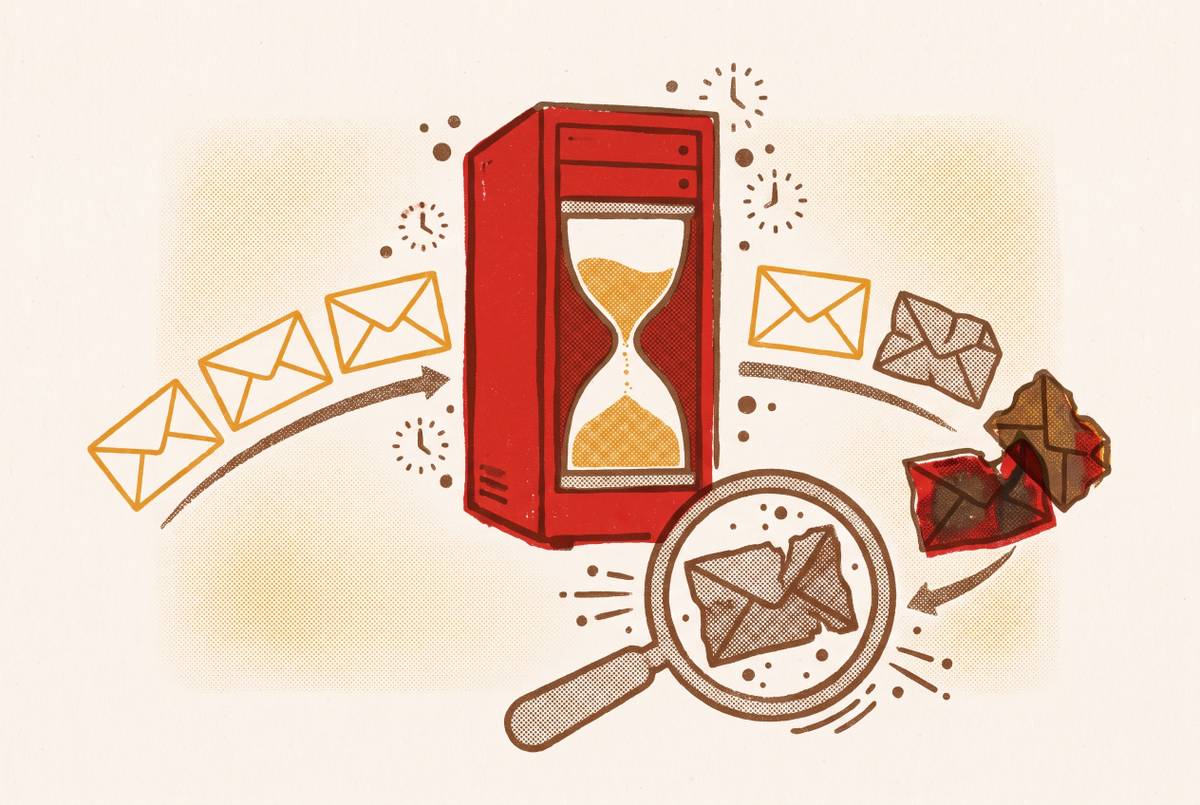
Delivery behavior makes those boundaries stateful. Stripe emits events including charge.succeeded, invoice.payment_failed, customer.subscription.deleted, and payout.paid, with retry behavior built into webhook delivery. Stripe retries after a handler returns a 5xx response. If the handler posts a payment alert but does not deduplicate on the payment intent ID, a retry can produce another Slack message. To catch that error, the test needs to know what the earlier delivery did.
What stateless mocks get wrong about an event-driven chain
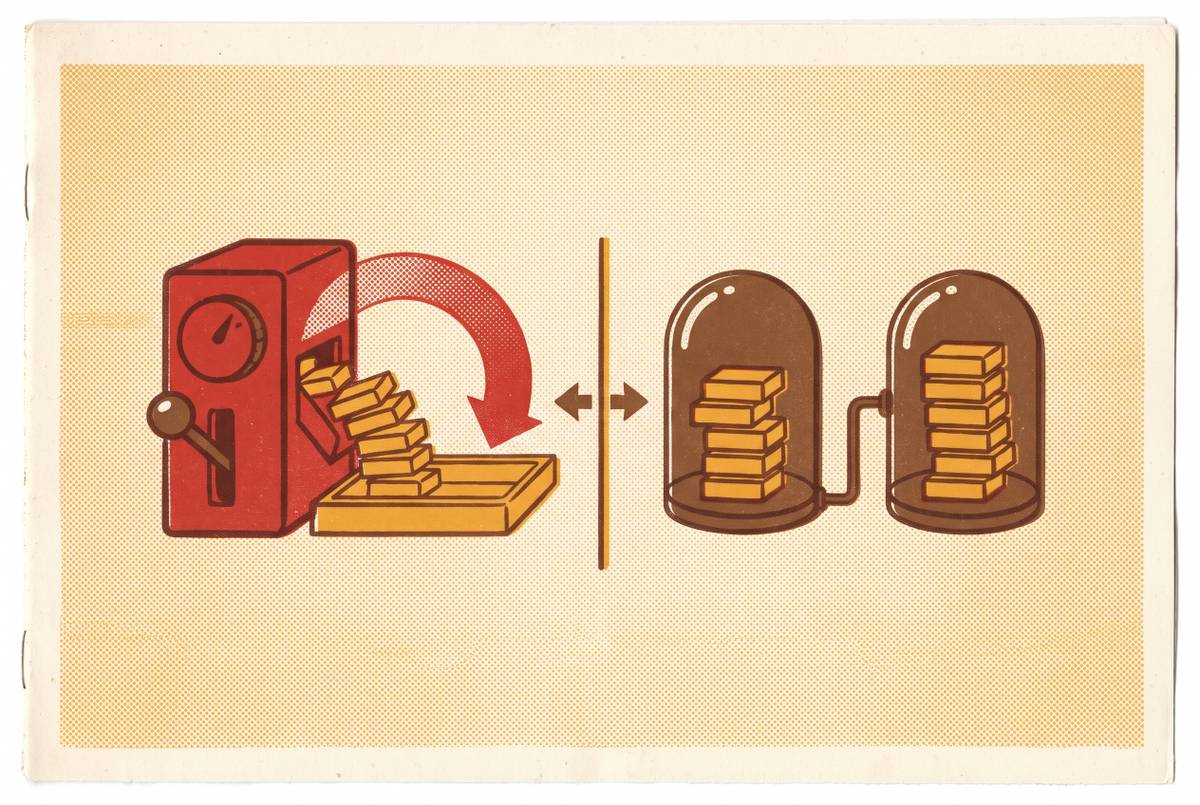
A stateless mock answers a request without remembering earlier requests. That is useful for testing how code handles an isolated response, but it cannot represent the cumulative state of this workflow. It cannot remember a newly created payment intent, generate a webhook because that record changed, or recognize a repeated delivery. The missing capability is memory across the chain.
Polling makes the limitation easy to see. When a mocked status endpoint returns the same fixture on every request, a loop waiting for payment_intent.succeeded either ends at once or waits forever. Changing the fixture by hand can exercise another branch, but it does not establish that the response follows from a stored state transition.
Duplicate handling exposes the same problem downstream. To exercise deduplication on pi.id, the test needs a first delivery whose effects remain visible when the second arrives. A 409-conflict response, where that is the behavior being tested, likewise needs a remembered first operation to represent a genuine conflict. Returning a canned 409 tests response handling.
A scripted, stateful mock can become a parallel service implementation with its own bugs and maintenance burden. A real instance against a seeded database may be cleaner where that option exists. For external APIs, continuous verification against the real service is the distinction between a maintained simulator and an unverified imitation. Without state, the Stripe-to-Slack test cannot establish that a retried event leaves exactly one notification behind.
What stateful simulation actually requires for this chain
A stateful Stripe simulator must preserve the relationship between an operation and everything that follows it. Creating a payment intent must produce a stored record with an ID that later calls can reference. A relevant state transition must then generate the corresponding webhook for the registered handler. The event must follow from the transition. A manually triggered stub does not test that relationship, even if its payload looks correct.
The first webhook delivery can return a 2xx and produce a Slack notification, while the second must expose the handler’s duplicate-detection path. On the Slack side, the simulator must record the destination channel and message content. With that record, the test can make an exactly-once assertion across repeated delivery attempts and check more than whether a posting function was called.
The brownfield example illustrates why existing behavior needs this context. The agent had to locate the exact handler lines where failures were only printing. The relevant test is whether the existing handler reaches the new notification function under the right event and avoids repeating its effect.
A test webhook timestamped more than five minutes in the past should exercise the handler’s replay protection and produce a 401 without using the live Stripe signing key. Between runs, the simulator must reset to a known starting point. Realistic pre-seeded data cuts the work of building fixtures and gives tests happy-path records that have more than the bare minimum of data. Together, these requirements make ordering observable while keeping each run reproducible.
How fault injection exposes the gaps that happy-path testing misses
A successful payment notification establishes only the normal path. When rate limits, transient 5xx responses, and Slack posting errors occur along with delivery retries, they can reveal bugs that tests of a single response miss. The test must keep its state when it adds a failure. Otherwise, it cannot distinguish a legitimate retry from a repeated side effect or show what happens when recovery is exhausted.
n8n describes three levels of error handling for Stripe-to-Slack integrations in production, starting with node-level retry. At this level, failed API calls retry with exponential backoff, such as 1s, 2s, and 4s delays, up to a maximum attempt limit. The test must exercise both recovery and that limit. A call that eventually succeeds does not demonstrate that persistent failure stops retrying as intended.
The next level is an error workflow. The third level is a dead letter queue for financial workflows where data loss is unacceptable. Here, the assertion must cover the retained event payload so that manual review and replay have the correct input.
Persistent failure also has consequences at the webhook boundary. Stripe disables webhook endpoints after repeated failures, requiring dashboard re-enabling and investigation of the original cause. Injected 5xx responses let CI test how the integration handles repeated failures before they happen in production. Fault injection therefore belongs inside the simulator’s behavior. The simulator must preserve the surrounding state while the integration retries, alerts, or captures a failed execution.
Why simulator drift silently invalidates tests that appear to pass
The Kalshi Python SDK’s issue #525 documents “Nightly spec-drift: strict contract tests failing (since 2026-09-30)”. A contract that a test environment previously accepted can diverge from the API it represents. The example shows why simulator fidelity cannot be treated as a one-time achievement, without establishing a drift rate for Stripe or Slack.
A simulator can remain internally consistent while becoming externally wrong. Its stored records, transitions, and responses may still agree with one another even after the live API changes. Every integration assertion can then pass against a model that is out of date. The mismatch may go unseen within that closed test environment. More tests against the same model do not fix the missing comparison.
Additive drift is particularly difficult to detect this way. New required fields added server-side may be absent from the simulator without breaking its own consistency checks. An integration that needs those fields then faces behavior that the simulated suite never covered. Stripe’s Events API evolves continuously, so a snapshot of its specification is not a permanent contract. Slack simulations need the same checks for divergence, though neither API can be assumed to change at Kalshi’s pace.
The response is automated nightly contract testing that hard-fails on specification divergence. That comparison must happen before an out-of-date model gives false green results in the application’s CI suite. Published fidelity scores add a measured, versioned record of how closely simulator responses match the live API. They make fidelity auditable over time. The score provides evidence of alignment, while the contract checks provide the mechanism for detecting departures from it.
What a full-chain test suite for a Stripe-to-Slack workflow looks like in practice
Pre-commit checks occupy the fastest stage, but they do not replace integration coverage. The PR integration tier, targeted at 2–10 minutes, runs stateful Stripe and Slack simulators as local services or CI containers. That stage exercises the chain offline, without live credentials or rate-limit consumption. Its assertions cover both responses and the state left behind.
For the basic notification case, a state transition produces charge.succeeded. The test asserts that the orchestration layer posts the correct payload to the correct Slack channel and that the Slack simulator records exactly one message. The payment-failure case then targets payment_intent.payment_failed at the handler lines where notification behavior belongs. Delivering that event twice must exercise deduplication on pi.id. The second delivery must return a 2xx without posting again, so the record still has exactly one message.
The security case exercises a different rejection path. A webhook timestamped more than five minutes in the past must return a 401, demonstrating that replay protection is enforced by the test harness. A valid repeated delivery tests idempotency, while an expired timestamp tests whether the handler accepts the request at all.
The failure case injects a Slack 503 and checks exponential-backoff retries. When failures persist through the attempt limit, the dead letter queue must receive the correct event payload. A separate state-transition case creates a subscription, produces customer.subscription.deleted, and checks the resulting cancellation state. The churn-alert channel must receive the corresponding message. These assertions connect the final notification to the state change that justified it.
After a merge, a small live suite runs for 10–30 minutes against real Stripe test-mode and real Slack. Its purpose is release confidence. It provides a final check that simulated behavior has not departed from the real APIs. Third-party suite failures must be reported separately so a Stripe or Slack outage does not appear to be an internal regression.
How stateful Stripe and Slack simulators fit into this workflow
The selection criteria follow directly from the tests. Both simulators need persistent state, local hosting, realistic seed data, configurable fault injection, and continuous verification against the live API. No single property is sufficient. A recorded cassette may reproduce a response without explaining how earlier operations produced it, while an unverified stateful model may reproduce an outdated contract with complete consistency.
Realistic seed data makes payment declined, insufficient funds, and refund flows available without rebuilding their setup in every test. Per-run fault controls must support a 429, a 503 on the Slack posting endpoint, and tests of exponential-backoff behavior. With local services or CI containers, those cases can run without live credentials or rate limits. This also lets runs happen in parallel across the containers the pipeline needs, while a known starting state keeps one run from changing the outcome of another.
Verification before every simulator release complements nightly contract checks. Published fidelity scores provide a versioned signal that teams can assess as the simulator changes. For AI agents that call Stripe or Slack as tools, the same deterministic, stateful environment can also serve as the RL environment substrate across thousands of containers. In either application, the decisive property is causal continuity. Each response and downstream effect must reflect what actually happened earlier in the simulated workflow.