Slack API Testing for Bot and Workflow Integrations
A stateful simulator tests Slack bot workflows locally without external dependencies.
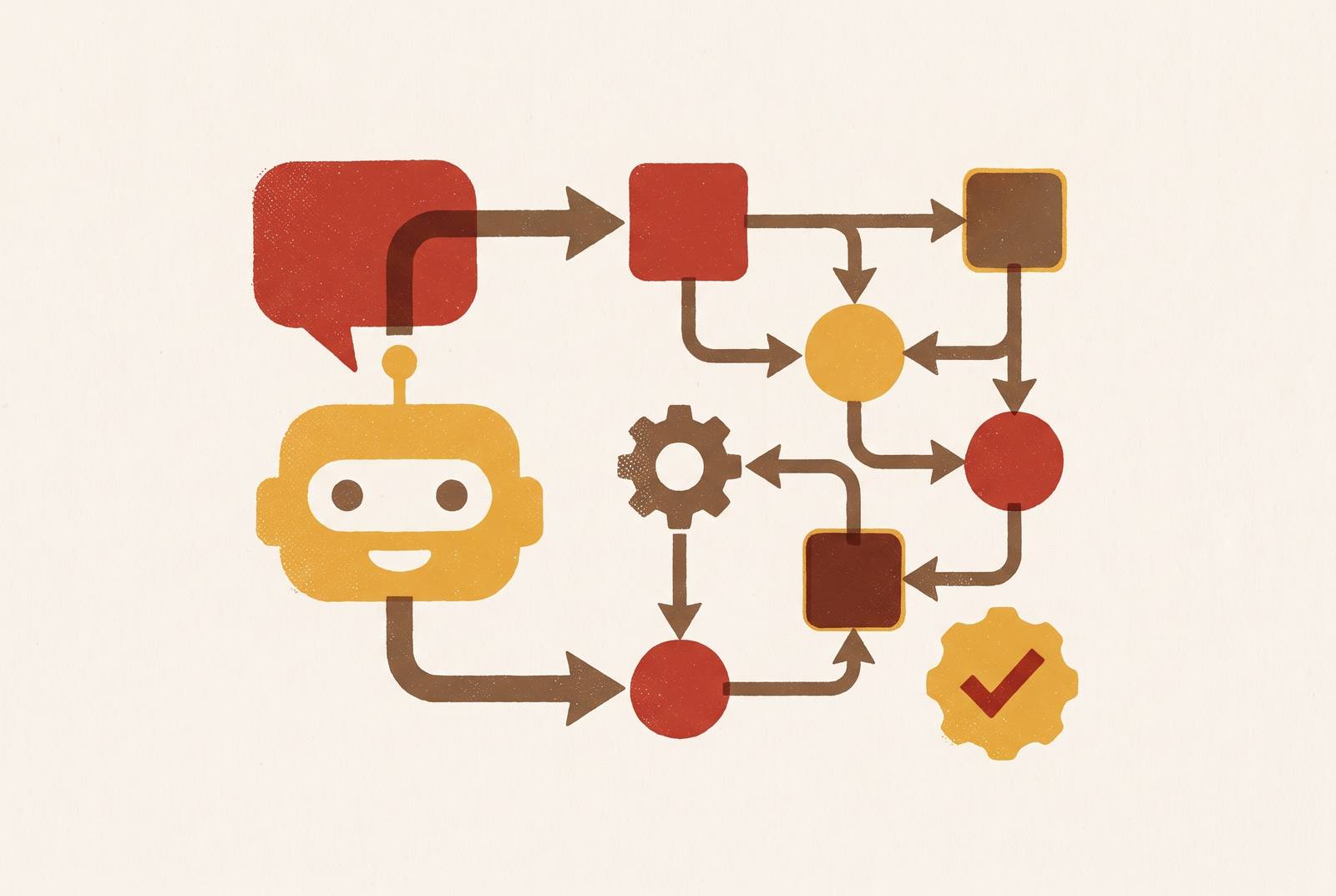
An HTTP 200 OK response is not enough to establish that a Slack API call succeeded. For Slack API testing of bot and workflow integrations, the structural answer is a stateful, locally hosted simulator, supported by isolated handler tests and live end-to-end checks.
What teams actually do to work around this, and why each approach fails
Slack introduced Steno in 2017, then archived it in June 2022 with a promise to “stay tuned for updated testing tools”. No replacement shipped for four years. The request for testing support in the official Bolt SDK’s issue #638 has been open since September 2020. A Slack maintainer proposed a solution in 2024, but as of April 2026 it had not shipped.
Without an officially supported way to test locally, teams often make duplicate test bots with the same manifest and use ngrok to expose local endpoints. Each developer replaces the endpoint URL to direct Slack traffic to their own process. The connection remains a dependency of every test run. This arrangement supports interactive development, but endpoint management becomes fragile across a team, and each developer still needs a test bot and a live workspace connection.
Making real API calls from tests removes some manual interaction but preserves the external dependency. Tests need network access, a workspace, and valid tokens that they can use in CI. A suite that takes 30 seconds locally can take several minutes in CI, while a Slack outage or rate limit becomes a build failure. Driving the Slack web UI with Cypress can exercise the visible interaction, but its fragility makes it a weak foundation for repeatable integration tests.
A dedicated test workspace is a reasonable boundary around live testing. It still requires credentials in CI and remains subject to rate limits. It cannot validate Block Kit offline. Although it provides real Slack state, it does not provide a locally controlled simulation of the chained state a workflow depends on. The distinction is between testing away from production and testing without depending on a live service.
Permissions add another source of misleading feedback. The 44-method scope audit found that five common chat methods reported chat:write:bot in the needed field, although that legacy scope cannot be added to a new app. Membership is a separate requirement. Even with the right scope, chat.postMessage can return not_in_channel until the bot joins through conversations.join, so blaming every access failure on scopes leads developers to look for the wrong cause.
Why multi-step Slack workflows expose the deeper problem with stateless mocking
A Slack bot workflow is a sequence of dependent state transitions. Consider a bot that posts a message, receives a button click, opens a modal, processes the submission, and posts an ephemeral reply. Each step depends on what happened before it. Testing the requests separately can establish that their shapes are correct, but it cannot establish that the sequence is valid.
A stateless mock returns the objects its author supplied. If its message response and modal response appear consistent, that consistency belongs to the fixture. Nothing has necessarily checked that the referenced message exists. A message ID used incorrectly later in the flow may therefore pass a test whose responses were written to agree. The test has described a successful interaction without proving that the bot can complete one.
Slack sends HTTP webhook events to an external server, and that server processes them and replies through the API. The interaction is a call-and-response loop. A static response cannot itself generate a webhook because persisted state changed, whereas a stateful system can connect the change to the event. Testing only outbound calls leaves that connection untested.
Workflow Builder adds inputs whose origin lies outside the bot’s codebase. Non-developers can define workflows that start Slackbot or agent conversations, leaving the receiving integration to handle inputs it did not create. Those inputs need their own integration coverage. Static fixtures remain useful for testing how a handler interprets an individual input, but end-to-end state verification must also establish that the resulting outputs fit the surrounding workflow.
How can you test stateful Slack APIs locally without hitting production?
A locally hosted Slack simulator closes the integration gap when it remembers state across calls and enforces the relationships between them. It records posted messages, reactions, and opened modals so later operations can depend on actual earlier operations. Order becomes part of the test. A test can post a message, trigger its button, and assert that the resulting modal contains the original content.
Offline Block Kit validation addresses a different part of the problem. It can raise a specific error before a request reaches Slack, avoiding a live-channel inspection as the first useful feedback on a malformed payload. Coverage must extend beyond individual message blocks. To be complete, validation must check arrays of blocks, single blocks, modal views, and home tab views. This does not depend on claiming that Slack always accepts invalid blocks, a claim its documented invalid_blocks error does not support.
The same local environment can make permissions deterministic. A simulator that encodes the scope-per-method mapping from the audit can reject an under-scoped call with missing_scope before deployment. Scope checks and membership checks must be kept separate. Otherwise, a local test can cause the same confusion as a live call when the bot has the right scope but has not joined the target channel.
Useful state also requires more than an empty store. With channel names, user records, and message history already in place, tests can check lookup paths as well as inserts into blank state. Faults need equal attention. Configurable 429 responses, timeouts, and 5xx errors let CI exercise exponential backoff, retry logic, and deduplication without waiting for Slack to fail. Injecting these conditions at a chosen point exposes how recovery interacts with state already created.
Simulator fidelity is a separate acceptance criterion. Recorded cassettes replay captured traffic, but those recordings can become stale as the API evolves without making the drift obvious. Maintenance needs an explicit feedback loop. Under the continuous verification model, the simulator is tested against the live API on every release, and published fidelity scores expose gaps. That model defines criteria for assessing the completeness of a maintained simulator.
The two-layer testing strategy that actually covers Slack bot integrations
Build two local testing layers, then use live end-to-end testing as a third layer to confirm the results. Assign each a different job. Handler tests cover decisions and payloads, simulator tests cover dependent operations, and live tests cover behavior the simulator does not yet model.
Start with handler logic in complete isolation, without a network connection or simulator. Inject a mock client as a drop-in replacement for app.client and assert on the channel ID, block content, and text supplied to it. These tests run in milliseconds and catch the majority of bugs. Their purpose is to establish what the handler asks Slack to do. Run them for every commit.
Include Block Kit validation in this first layer so character-limit violations, invalid block types, and malformed modal views fail before reaching the simulator. Add assertions based on the deterministic scope-per-method mapping for the handler’s requested calls and channel types. These checks belong close to the code. They provide specific feedback without requiring a complete workflow to run, while leaving state-dependent access conditions and call sequencing to the next layer.
Then run integration tests against the local stateful simulator. Exercise the full message, button, modal, and reply flow, with assertions that later steps reference state actually created earlier. This is where sequence becomes enforceable. Configure 429s or 503s mid-flow and assert that retries recover without duplicate posts. For Workflow Builder integrations, supply the inputs a non-developer-authored workflow would produce and check the bot’s outputs rather than testing only inputs generated inside the bot.
Protect those tests from shared-state pollution. Use isolated test data and serial execution mode where concurrent CI jobs target the same simulator instance. Local hosting alone does not provide isolation. The integration layer should run without live Slack credentials or external network access, with a container supplying the simulator on every pull request. Handler checks belong at pre-commit, with that stage kept under 30 seconds.
Run real Slack end-to-end tests only on merges to the main branch. Keep test-mode credentials in CI secrets, never commit tokens, and keep the bot in a workspace used only for testing. Live tests remain a confirmation step.
Use that live layer to establish the bot’s manifest from actual permission behavior. Call each method without the target scope and inspect the needed field. Check the result against the current scope names in the documentation. The audit’s legacy chat:write:bot result means blindly copying an error field is not sufficient, because a new app needs chat:write. Check channel membership on its own so a not_in_channel response does not lead to scope changes that are not needed.
What AI-powered Slack bots require beyond standard integration testing
AI-powered Slack bots add a decision sequence that conventional integration assertions do not fully examine. An agent can produce coherent text while choosing the wrong endpoint, extracting the wrong parameter, or misreading intent from an earlier turn. The final message may still look correct. A payload-validity check therefore cannot establish that the agent performed the right action, even when every request in the flow was accepted.
An incoming email triggers a workflow, the AI generates a draft response, and a user can edit and finalize it within Slack before sending it to the customer. The interaction depends on retained context. Bots that route incident alerts or orchestrate approvals have the same testing concern, because tests must check that a later reply is interpreted in relation to an earlier request.
A stateful simulator supplies a deterministic environment for the agent’s tool calls, even though that does not by itself make the agent’s choices deterministic. Calls produce consistent, inspectable Slack state. A test can then assert that the agent posted the right message to the right channel at the right point in the conversation. This extends integration coverage from request correctness to the consequences of the decision sequence. It also gives a concrete basis for detecting a plausible answer produced through the wrong action.
Fault injection becomes more demanding in this setting. After a 429 response, an agent may retry with different text, create a duplicate post, or break the conversation thread. The fault’s position changes the test. A simulator must be able to inject it at a specific point in a multi-turn flow so assertions can examine recovery against the state that already exists.
Reinforcement learning environments and agent evaluation pipelines introduce a further requirement for isolated state at scale. Thousands of parallel rollouts each need their own Slack environment, without sharing the messages and decisions of other episodes. Containers provide the required local execution boundary. A stateful simulator that can be reset between episodes supports those evaluations without live workspace limits. For these systems, API integration testing must establish not just that an operation succeeds, but that it succeeds in the right sequence, against the right prior state, without contaminating the next run.