Structuring Integration Tests Around the Full Lifecycle of a Stateful API Workflow
Test stateful APIs by structuring assertions around creation, state change, polling, and teardown.
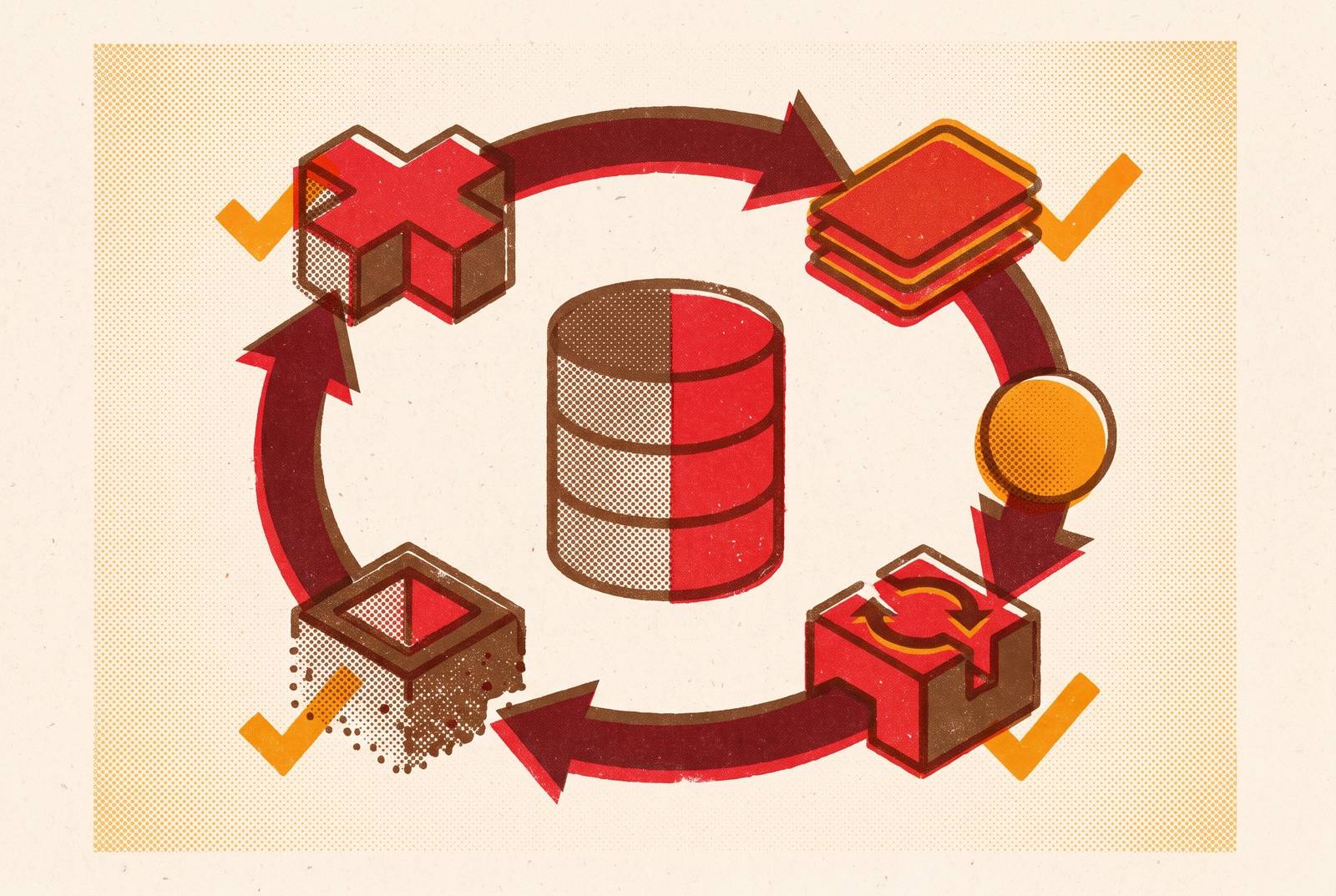
Integration testing against stateful APIs requires an isolated environment that preserves resources and their state across calls, without hitting production. Structure each test around creation, state transition, polling, conflict, and teardown, with assertions at every phase boundary. The decisive requirement is cumulative state, because a successful response alone cannot prove that the next operation acts on the world the previous call created.
Why stateful API workflows break in places stateless mocks cannot reach
An integration creates an order, receives a 201 with an ID, polls that ID until its status changes, then attempts to cancel and expects a 409. A stateless mock breaks this sequence immediately. The creation response can name an ID that the GET fixture does not recognize, while every poll returns the same status. The loop never terminates correctly, and the cancellation conflict has no established state to reject.
This is the normal shape of an asynchronous integration. Stateless mocks verify individual request and response shapes, but they do not establish what exists after a sequence of operations. A suite can therefore pass its endpoint assertions while leaving the workflow itself untested.
Testing tools differ in how much behavior they represent. Static tools always return one response per endpoint, while conditional tools choose a response from request parameters. Stateful tools keep data across calls so that a resource can be created and then retrieved, and full behavioral simulation also models how it behaves. Tooling thins out sharply at the stateful level, precisely where these workflow dependencies begin.
The lifecycle phases of a stateful API workflow as a structural map for test design

Creation establishes whether a resource exists in the system’s state. The decisive assertion is a subsequent GET returning the correct shape. State transition then tests the rules for how that resource can change. A subscription might move from trialing to active to paused to canceled, while an order moves from pending to fulfilled. Both valid changes and out-of-sequence operations need coverage.
Polling tests how the client waits for an asynchronous change. The client must wait for its polling interval, use exponential backoff, stop when it reaches its maximum retry count, and handle terminal failure without hanging. A response that is always complete skips this behavior, while one that is always pending never exercises successful termination.
Conflict tests valid operations attempted at the wrong time. Examples include a 409 on duplicate creation and a 422 on a state-illegal update. The client must handle these errors without duplicate mutations and surface the appropriate failure to its caller. Teardown then checks cancellation or deletion and the behavior of subsequent operations, such as a GET returning 404 or a deleted status. It also prevents one test’s resources from contaminating the next.
Why cumulative state is the only substrate that makes all five phases testable in sequence
Polling needs a resource that exists and whose status can change, while duplicate creation needs an earlier creation that took effect. Teardown needs something real to terminate or delete. Without those dependencies, the test exercises a response script.
With care, fixtures can seem to reproduce the sequence. A fixture encodes the expected world at authoring time rather than deriving the world from calls made during execution. It can return a conflict, but that does not prove that prior operations caused the conflict. If a mock starts tracking those operations and enforcing their consequences, it has introduced stateful behavior.
A test can keep its state without sharing it with other tests. That distinction is essential to reliable execution. State leakage is a primary source of flakiness in shared-state suites, so the remedy is per-test or per-session isolation. Fetch Sandbox spells out how its per-session isolation works. “Your CI run does not collide with your colleague's. No shared state, no flakiness.”
How to write integration tests for APIs where order of operations matters
The practical method starts with the workflow. For a payment integration, the journey can run through POST /customers, POST /payment_intents, polling GET /payment_intents/{id}, a refund conflict, and the appropriate cancellation or deletion operation. Each step belongs to a lifecycle phase. This mapping identifies the dependencies that independent endpoint tests would erase.
After creation, a GET must establish that the resource exists with the expected shape. After a transition, its status must reflect the change. Polling must exercise at least one retry and stop at the correct terminal state rather than a timeout, while conflict assertions must check both the error and the absence of duplicate state. Teardown ends with another read that establishes the terminal result.
Isolation belongs in that design from the start. Each test should create its own resources without borrowing them from another test, run its assertions, and clean up. Realistic data already in the simulator can supply the surrounding context without the need to build fixtures by hand. Coverage should then follow failure cost, with payment and fulfillment workflows that touch money or user data blocking every PR. Lower-risk enrichment or analytics workflows can run on a schedule or in a broader release suite.
Webhook events as a first-class lifecycle concern, not an optional add-on
A webhook is how a consumer learns that a state transition occurred. It is not merely an incidental notification. A lifecycle test for a webhook-driven integration must establish that the relevant event fires, reaches the handler with the expected shape, and represents the correct state. A sandbox that changes resources without emitting corresponding events tests the pull path while leaving the push path uncovered.
The asynchronous sequence begins by triggering a transition through the API. The test then checks the matching event and payload before asserting that the handler processes it correctly, including signature verification and idempotency key handling. Duplicate delivery needs its own assertion. Replaying the same event must not produce duplicate mutations, and a terminal failure must be classified.
Provider retry behavior makes these assertions operationally significant. PayPal retries failed webhook deliveries many times over several days, so non-2xx handler responses must be tested together with duplicate-mutation protection. Captured payloads can complement the stateful sequence without replacing it. A payment adapter suite captured sandbox deliveries across Stripe, PayPal, and Polar, including chargebacks, subscription changes, and refund normalization, then replayed them as fixtures. Its PayPal legacy v1 refund case required a retry and an alert when normalization failed.
Fault injection as the stress test for lifecycle resilience across every phase
Once the happy-path chain works, tests should add faults at the same lifecycle boundaries. During creation, a 429 or 503 tests whether retries avoid duplicate resources. During polling, injected latency tests timeout and backoff behavior. Conflict assertions should still establish that retries have not written duplicate state. During teardown, a failed DELETE or cancellation tests whether the integration can keep the resource from getting stuck in an inconsistent state.
State transitions also need response-level faults alongside network failures. A 200 response can still describe the wrong state. Injecting an incorrect status field tests whether the client validates the transition before advancing the workflow. A payment integration that trusts the status code alone can proceed past a failed payment.
AgentChaos, published in August 2026, found that agent tool-use faults returning HTTP 200 with omitted or truncated content were its most damaging, causing more damage than subtly incorrect field values. The hardest fault types were especially hard to diagnose. Integrations need to validate required response content even when transport-level success appears normal. Infrastructure tools such as Gremlin, AWS Fault Injection Simulator, and LitmusChaos for Kubernetes address network and service-level failures, but not faults in specific response body fields. Response-level injection can test those fields as part of the lifecycle test.
How the lifecycle framework applies to Stripe and PayPal integrations concretely
For Stripe, creation begins with POST /customers followed by POST /payment_intents, with a read asserting that the PaymentIntent exists in requires_payment_method status. Confirmation then tests a transition to requires_action or succeeded. For asynchronous payment methods, the test must poll GET /payment_intents/{id} until the status is terminal. The conflict case attempts a refund on an already-refunded charge and checks for 402 with the correct error code, while teardown cancels a PaymentIntent that did not succeed and asserts canceled.
The webhook layer covers distinct branches of that payment lifecycle. Stripe’s event-types reference identifies payment_intent.succeeded, invoice.payment_failed, and charge.dispute.created as separate events for successful payment, failed invoice payment, and a customer dispute. They are not interchangeable success notifications. Tests must associate each event with its corresponding transition and expected payload, rather than replay every event after every PaymentIntent operation.
Version configuration introduces a separate fidelity risk. A Stripe webhook endpoint with a null api_version follows the account default, so an account upgrade can change payloads without a code deployment. Local fixtures cannot establish that configured version. Stripe’s “Endive” version, 2026-10-28, also illustrates API evolution through additions including Outbound Payments, Payout Intents, Recipient Verifications, and Financial Addresses v2. Because Stripe sandbox payments do not run through real card networks or payment providers, simulator coverage should be accompanied by a small real-API configuration check for payment-critical workflows.
PayPal’s sandbox testing guide states that the sandbox has the same API feature set as the live environment, while excluding some features, including closing accounts, monthly statements, shipping preferences, and PayPal Shops support. PayPal’s webhook simulator creates demonstration events that have no link to any App, so those events alone cannot prove that earlier calls from the application caused the expected notification.
The PayPal conflict and teardown cases therefore need explicit non-2xx handling and retry assertions. Repeated deliveries must not accumulate duplicate side effects. The refund path also needs the legacy v1 normalization failure case, with an assertion that failure produces a retry and an alert. A 200 response from the refund endpoint cannot substitute for that assertion, because successful API execution and successful downstream normalization are separate test concerns.
Fitting lifecycle tests into a CI pipeline without making the suite slow or fragile
A tiered pipeline keeps complete workflow coverage from becoming an every-commit burden. Pre-commit checks should remain under 30 seconds and run unit and contract tests. The PR gate runs lifecycle integration tests against a locally hosted stateful simulator, including the critical creation-through-teardown workflows. Post-merge or pre-release runs should cover more regression, fault injection, and webhook replay across the variants the integration supports. Risk determines the breadth at each stage.
Local simulation removes several dependencies that otherwise destabilize API-driven CI. Live sandboxes can throttle parallel tests, while credential rotation, expiry, and scope changes can break runs without a code change. Shared sandbox resources create another collision point. Per-session state isolation separates concurrent runs, while local execution avoids live credentials and provider quotas. Fetch Sandbox explicitly supports large numbers of parallel test requests without throttling.
Modern CI platforms, including GitHub Actions, GitLab CI, Azure DevOps, Jenkins, and CircleCI, support automated integration tests and deployment gates. A simulator that starts almost instantly fits that execution model. Ephemeral environments and automated rollback when post-deploy checks fail can help with the rest of the release process without making every PR depend on a live sandbox.