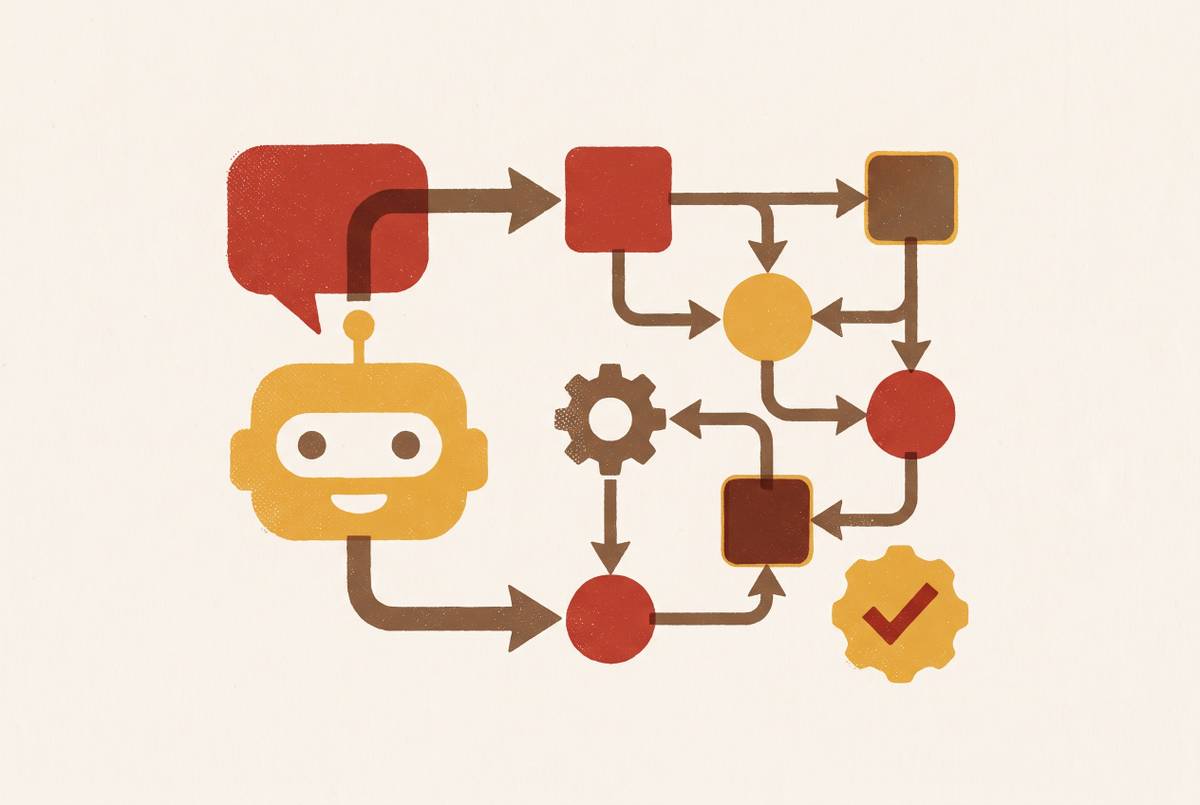
Choosing a Fully Controllable API Simulator Over Mocks for Complex Stateful Test Environments
Simulators keep state across requests so tests verify actual workflows instead of isolated calls.
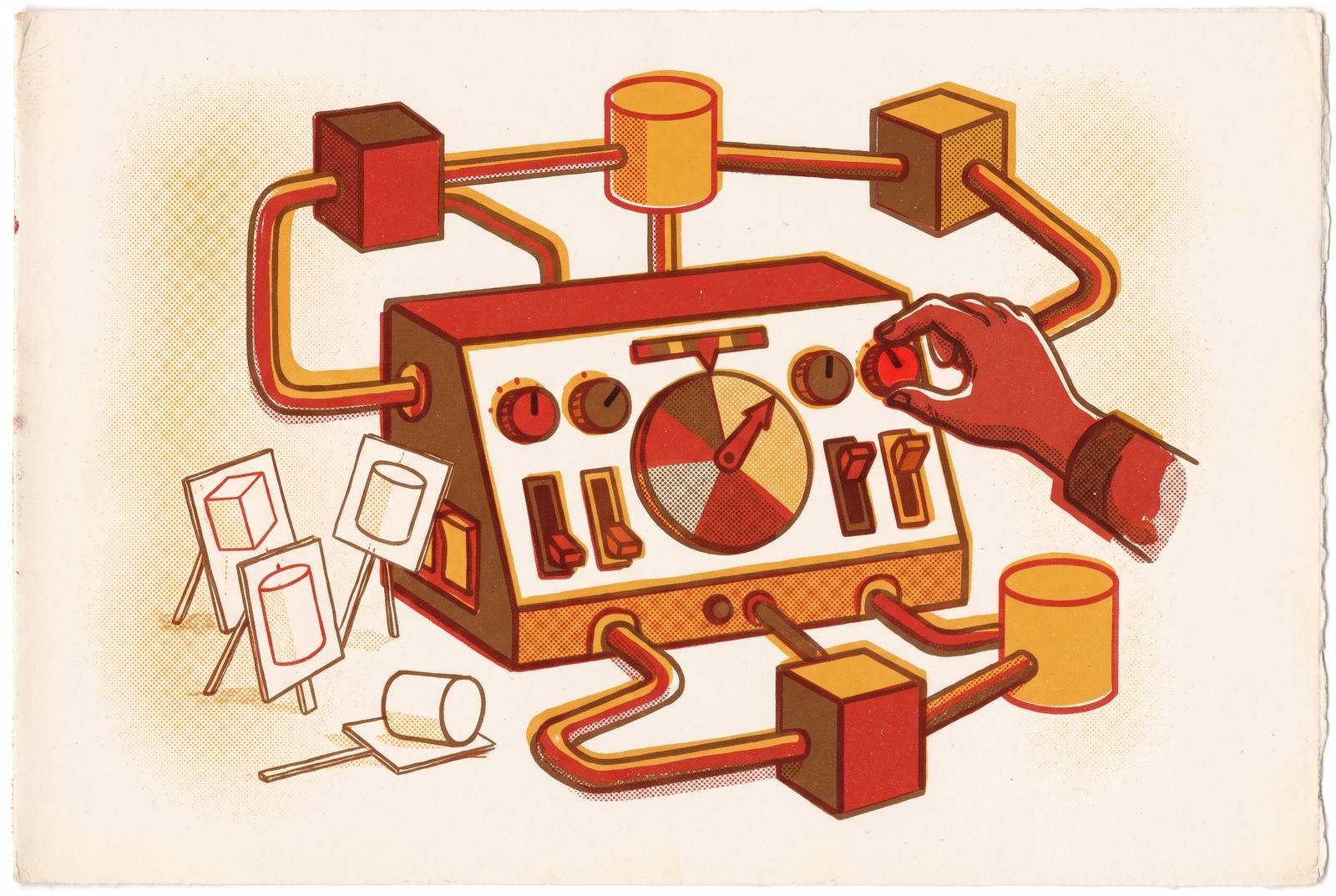
Integration testing against stateful APIs requires a controllable simulator that remembers prior calls, enforces valid transitions, and returns the cumulative results of a workflow without hitting production. Mocks remain appropriate for isolated unit tests, but configured responses cannot validate relationships between successive operations. A simulator that teams can trust must also keep test sessions separate, reproduce failures, and be checked against the real API on an ongoing basis.
Why mocks work for unit tests but break down in integration workflows
Mocks give unit tests a useful, narrow boundary. They isolate a function from network dependencies, verify that it makes the right HTTP calls with the right headers, and return deterministic responses for error-path testing. For early frontend work, a configured response can also unblock development before an integration is ready.
The boundary changes when correctness depends on earlier operations. A test that checks whether a function sends a request asks a different question from one that checks whether several requests produce a valid cumulative result. Mocks answer the first question well because the expected call and response can be specified independently. They cannot establish the second through fixed responses, because the test needs a relationship between actions.
What statelessness actually means when a test sequence spans multiple calls
A stateless mock server maps a path to a configured response. It has no memory of a prior request. Consider a test that creates a customer, creates a subscription referencing that customer, and then retrieves the subscription to assert that the customer appears on it. A mock can return a hardcoded customer followed by a hardcoded subscription that contains the same customer. Their apparent consistency comes from the configuration.
A four-step payment test makes the distinction observable. First, POST /payments returns 201 with status "pending". Second, GET /payments/{id} returns 200 with status "pending". Third, POST /payments/{id}/capture returns 200 with status "captured". Fourth, another GET /payments/{id} asks whether the payment’s status has actually changed.
A stateful sandbox returns "captured" on that final read. A mock returns whatever was configured for the GET route, usually still "pending", because capture did not change anything that the read consults. Configuring the last response as "captured" can hide the missing causal link through months of passing tests and a final release check. Production then enforces a missing constraint, mutates state differently, or includes the new entity in a list endpoint that the mock never updated.
The spectrum from mock to full stateful sandbox, and what sits in between
Test doubles sit at different points on a spectrum. At one end, a mock or stub server provides a stateless path-to-response mapping. It is fast and cheap, which makes it a good fit for unit tests and early frontend work. Service virtualization goes further by simulating dynamic behavior and real network conditions. It can maintain session state, enforce business rules, vary responses based on earlier interactions, and reproduce latency and fault patterns.
That makes service virtualization useful for negative-path scenarios such as downstream timeouts or malformed responses. Its distinction from a full sandbox is persistent state management. A full stateful sandbox maintains a world in which creation, updates, and deletions are remembered across a session. State machines enforce valid transitions, while webhook events fire as a consequence of changes.
Provider sandboxes sit closer to that stateful end. Stripe sandbox or test mode sandbox, Paddle sandbox, and Plaid sandbox provide stateful environments, but they require provider accounts and remain subject to rate limits. Those dependencies distinguish them from a fully local simulator even though they avoid production transactions. The word “sandbox” alone therefore establishes little about a tool’s capabilities. The create-read-mutate-read test shows whether the advertised environment keeps track of state or serves configured responses.
How do you test APIs where order of operations matters?
Stateful simulation is required when the result of a call depends on what happened before it. Creation followed by a read or update is the simplest case, because the later operation must act on the resource that was actually created. Idempotency, retry, and out-of-order delivery tests add another requirement. The environment must remember whether a call has already succeeded. Without that history, it cannot distinguish a repeated operation from a new one.
Relationships between resources require the same discipline. A subscription referencing a customer, an invoice referencing a plan, or an order referencing a product needs relationship enforcement. Asynchronous choreography adds a temporal dependency. A payment intent created synchronously may lead to order fulfillment only after a webhook arrives seconds later. A static stub cannot validate that chain as a consequence of changing state.
Tests of cumulative state, prior success, resource relationships, and asynchronous consequences belong in a stateful environment. Tests of a single function’s response handling or its use of particular headers remain appropriate for mocks. Stubbing a dependency with no public specification also remains a valid mock use case.
Why CI/CD pipelines are the highest-stakes environment for this distinction
CI amplifies weaknesses in the test environment. Live third-party endpoints introduce rate limits that can fail a build even when the application code is correct. Those failures make external throttling look like a defect in the integration. A local simulator removes that external rate-limit variable. It also reduces the need to inject production API keys or sensitive staging credentials into runners, where storing them in CI variables creates a wide attack surface.
Some workflows may still need sandbox or deployment credentials, so adopting a simulator does not eliminate every secret from a pipeline. It does remove the need for sensitive third-party credentials in tests that can run entirely locally. That security benefit is distinct from avoiding slow or flaky network dependencies.
A team should declare it as a service container and configure jobs to fail if it does not start. Silent fallback to a real endpoint, or to no working dependency, can produce a green result for the wrong reason. Parallel jobs also need per-session isolation so that each creates and queries resources within its own consistent world. A shared stateless mock instead returns the same configured response regardless of each job’s history.
Fault injection as a first-class requirement, not an optional add-on
Correct state transitions cover only the happy path. Production integrations also encounter a 429 with a Retry-After header, a 503, a slow response, or a dropped connection. A simulator must make these conditions reproducible rather than leave resilience testing dependent on an external service misbehaving. Network-level injection addresses latency, connection resets, and DNS failures. Application-level injection addresses API errors, malformed responses, state-transition errors, and webhook delivery failures.
Response content needs its own fault controls. The AgentChaos study, arXiv 2608.06790, was published in August 2026 and looked at five agent systems and four backbone models. It found that the most damaging failures varied by system architecture, including timeout, truncation, and schema faults. Omission faults such as truncation were especially hard to diagnose because they did not raise an error. A conventional infrastructure chaos tool can interrupt a connection or add latency, but it cannot modify specific response fields to truncate content or leave tool_calls structurally malformed.
The implication extends beyond agent systems to ordinary integrations. A successful transport exchange does not establish that its payload is usable, so network-only fault injection leaves a gap in resilience testing. Simulator-level controls for fixed delays, random delays, malformed payloads, and connection resets let teams exercise retry and circuit-breaker behavior under controlled conditions. A simulator limited to successful responses cannot provide that evidence. Its state model may be correct while its coverage of failure behavior remains incomplete.
Why AI agents and RL environments need stateful simulators more acutely than traditional software
Agents make the limits of scripted responses especially acute. Their tool-call sequences are non-deterministic, so a mock configured for one request order can fail or return incoherent results when the agent chooses another. The next action depends on prior results. The environment must therefore handle valid changes in the order of calls while keeping track of what earlier calls did. Memory is necessary for the interaction to remain coherent.
This differs from evaluating a model’s answer in isolation. Agentic systems invoke tools, APIs, and databases, and testing must establish whether they select appropriate tools, pass accurate parameters, and handle failures gracefully across the resulting sequence. Stateless responses cannot validate those choices against an evolving external world. Static datasets also cannot show how decisions change with context. Multi-turn simulation lets users and agents have realistic conversations that use tools and follow branching paths.
Reinforcement learning environments add a scale requirement to that behavioral requirement. Training needs thousands of parallel rollouts, each interacting with a deterministic, controllable, horizontally scalable API environment. Live APIs cannot provide that combination of control and scale. Stateless mocks can supply responses, but not the state fidelity that makes rewards meaningful.
What to look for when evaluating a stateful API simulator
The four-step payment flow is the minimum test of whether mutations affect later reads. Beyond that, each test run or CI job needs an isolated session rather than shared state that parallel runs can alter. State machines must reject invalid transitions. These requirements distinguish a consistent environment from a collection of responses that happen to fit one test.
Webhooks should fire automatically on state changes. Realistic pre-seeded data also cuts the work needed for setup, since it comes with recent transactions, existing resources, and populated relationships. An empty sandbox forces every test to create all its preconditions. Pre-seeded data makes the environment immediately useful without removing the need to test creation and mutation.
Control must extend to failures and deployment conditions. Latency, 429 responses, 503 responses, malformed payloads, and connection resets should be configurable per endpoint. The simulator must run locally or in CI without live credentials or calls to the real service. Offline and air-gapped operation is a legitimate enterprise requirement, which rules out environments that require a network connection or phone home to function.
Accuracy requires evidence beyond a successful demonstration. A team looking at a vendor should ask whether it publishes fidelity scores or runs automated conformance checks before each release. A simulator can keep track of its own state perfectly and still get the external API wrong.
How simulator drift happens and why continuous verification against the real API is non-negotiable
A simulator is still a model of another system. When the real API changes, an unchanged model can stop representing its behavior even though its internal workflows remain consistent. Hand-maintained mocks drift faster because someone has to update a stub by hand every time the API changes. Teams can discover that gap only when production behaves differently from their tests. Statefulness removes the absence of memory, but it does not by itself prevent this divergence.
A team should automate continuous verification by running the simulator’s own test suite against the real API on a schedule, comparing the results, and surfacing differences before they reach a developer’s integration test. This verification is distinct from making routine CI jobs depend on live endpoints. It checks the model against reality so that local tests can rely on it. Published fidelity scores or an automated conformance pipeline provide evidence for the simulator’s accuracy claim.
Without that evidence, a team that adopts a simulator trades one unverified test double for another. A verified stateful simulator instead combines remembered actions, enforced relationships, controlled failures, and continuing comparison with the real API. The actionable choice is therefore not simply to replace mocks with a more elaborate environment. It is to adopt stateful simulation together with continuous conformance verification, breaking the cycle of tests that pass because their assumptions were never challenged.